The ledger that used to take two hours now takes ten minutes.
Morning purchases logged, reviewed, and reflected in the books, without a notebook or a spreadsheet.
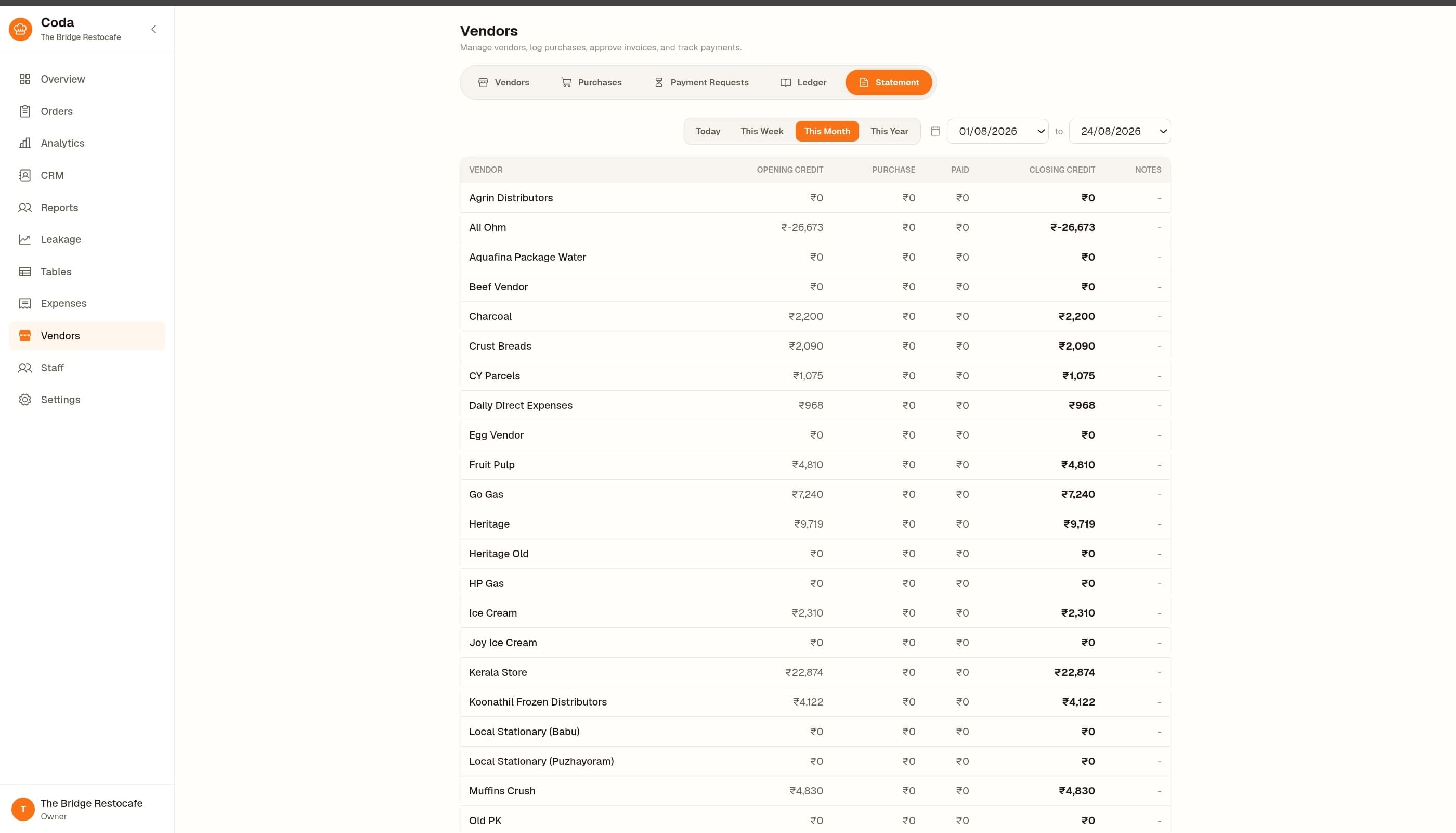
What actually changes about buying and books
Log a bill the moment it arrives
The morning's vendor deliveries get entered as they land, not reconstructed from memory that evening.
A manager reviews before it goes further
Bills get checked against what actually came in before they're sent up, catching mismatches early.
Lands in the owner's ledger automatically
Once reviewed, the same numbers show up in the owner's dashboard. No separate report to send.
A running history, not a stack of paper
Every vendor, every bill, searchable, instead of a shelf of notebooks going back years.
Runs on its own schedule
Not tied to a single order. Purchasing happens once a day, and the ledger follows that rhythm.
One place for every vendor
Produce, meat, dairy, dry goods, whoever you buy from, tracked the same way.
“I watched our purchase manager lose two, three hours a day to a paper ledger with no way to track what had actually come in or gone out. That's the exact hour we built this to give back.”
Who logs the purchases, the manager or a separate role?
However you already run it. Most restaurants have a purchase manager or the person on morning shift log it, then a manager reviews before it's final.
Does this replace our vendor relationships?
No. You still buy from the same people, the same way. This replaces the notebook you used to track it in, not the buying itself.
Can I see history from before we started?
Only from when you go live. We won't invent numbers for the months before that, but everything from day one is there for good.
Put the paper ledger down.
Active at Bridge Restocafe, Ottapalam. Book a 20-minute walkthrough and see a real morning's purchases logged.
Book a Demo